What is a Creative Technologist?
Why creative technologists will define the future of creative expression.
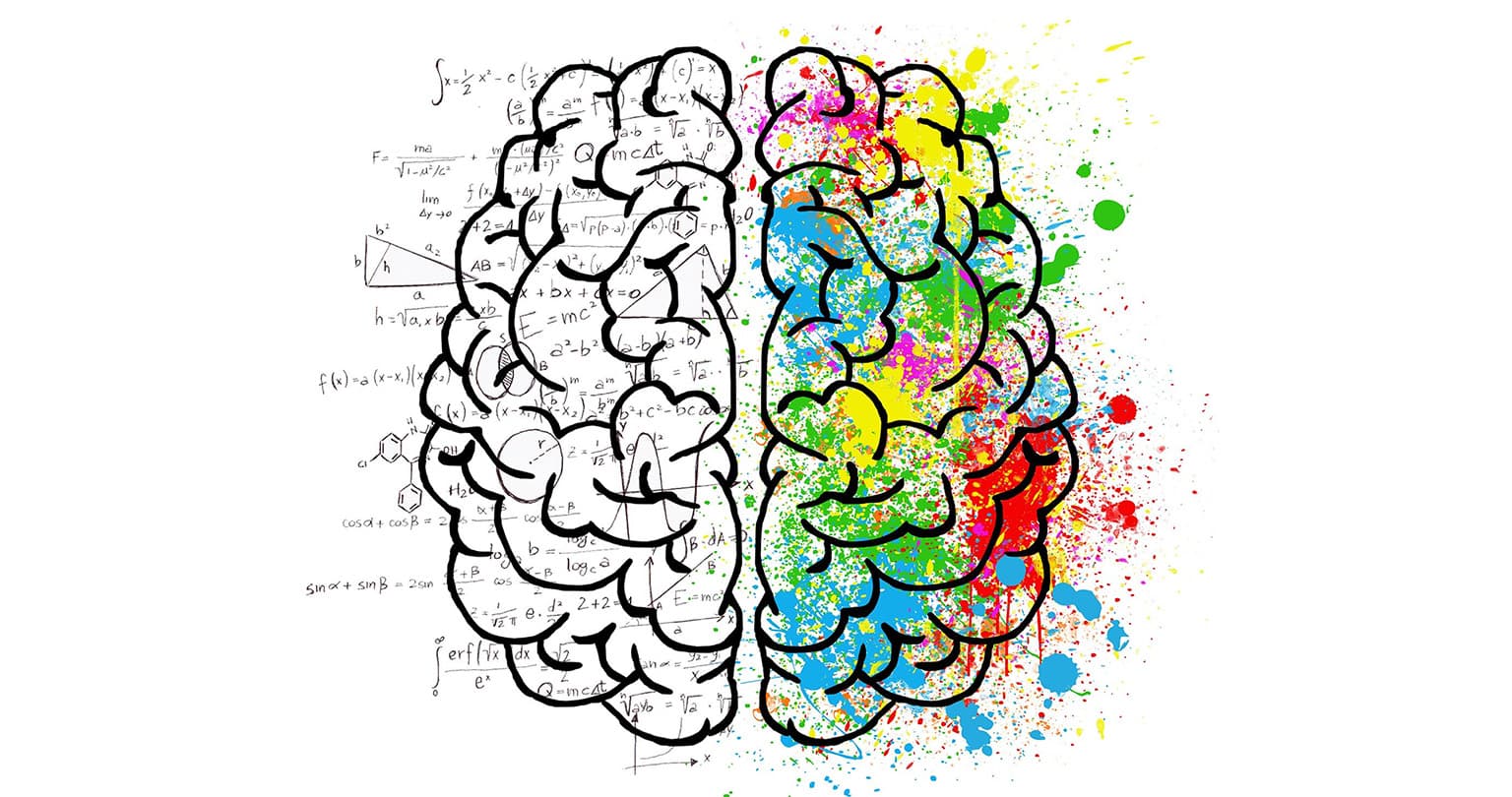
Creative Technologist is a job title that for most people don’t mean anything. That was made clear to me about 2 years ago. I was on jury duty and a group of around 50 of my compatriots were going through the please-don’t-let-it-be-me jury selection process. When my turn came around and the judge asked me my occupation, I said boldly “I’m a Creative Technologist”.
Behind the judge’s blank stare I could see him thinking, “this is just another made up job” so I quickly explained. “I’m basically a developer but I work in marketing and with creative people”, I said. He still didn’t get it. When I told him I work at Herbalife, his lightbulb turned on. “Wow, they’re still around?!”, he exclaimed. He still didn’t know what a creative technologist does but for his purposes he had me pegged and I suppose well enough that he kept me in the jury bench for the trial.
I’ve never been satisfied with that answer I gave to the judge and many of the subsequent answers I’ve given to people I’ve met over the years. “I create marketing activations” or “I work in marketing” or “I build tech for creative people” never seemed sufficient. It’s not that those answers are wholly inaccurate, it’s more so that those answers don’t capture the full scope of what the title covers and the creative potential that a creative technologist can unlock.

I first came across the title Creative Technologist in 2019 at an internal awards event at work. Our team won a global innovation award for the marketing assets we brought to market that year using Ceros, a platform our team onboarded for building and publishing interactive web experiences.
Carla Silveira-Hernandez, our creative director at the time, mentioned Creative Technologist as a role she was looking at for the team. Carla has an amazing knack for developing growth paths for people on her team, and since I supported a lot of the technical and operational implementation for Ceros, I think she saw that as a path for me.
But my journey to become a creative technologist didn’t start there. I studied film production in college and before I started on that path, I was learning creative writing. At the same time, I was a kid and teenager that grew up with the emerging internet - learning how code works, learning how to build PCs, flash games, and webpages.
After film school, I toggled between video production jobs where I applied what I learned in school and digital media jobs where I applied my hands-on computer and programming know-how. I also went into a Media, Technology, and Entertainment graduate program.
All of that experience was a great primer, but it didn’t make me a creative technologist.
Cella, the Creative and Marketing consulting firm for in-house agencies defines a creative technologist as “someone who sits at the intersection of technology, creativity and strategy. They are makers, developers, artists, and thinkers who understand both the language of code and the cadence of storytelling.”
In another What is a Creative Technologist blog post I found from a Creative Technologist working at Gap Inc., John e Evanofski wrote of his role, “In my position I’m squarely in the middle of constant, evolving conversations about best practices, accessibility and user experience. I need to work across creative, technological and production teams to help them speak the same language.”
Those definitions capture aspects of what a creative technologist does but I define the role more broadly. A creative technologist isn’t just an interlocutor. A creative technologist is a builder. Specifically, a creative technologist builds tools and systems that enable new creative expressions.

Creativity is innate. I remember when I was a child, somehow I could take anything, including my mother’s cabinet figurines, and turn them into toys that went on adventures. I’ve seen over the years with my nieces and nephews how they are able to play games and do activities with characters mobilized by their imagination.
Technology allows our innate creativity to be expressed broadly and across mediums of communication. A great artist can create a masterpiece by dragging a finger through the dirt but once afforded the tool of a stone against a rock or a paintbrush against a canvas, the creative possibilities expand exponentially.
Today, we live in a complex world and our creative mediums are also similarly complex, driven by technology that automates and simplifies the intermediary steps that prelude creative output. Bringing something new to market in an impactful way requires many people with many different specialties.
That is why professional creative technologists need to be able to speak the language of not just engineers and designers but also business leaders, since strategy is key to why you build what you build. Complexity is also why prototyping is one of the most important things that corporate creative technologists do - the best way to communicate how something could work is to show it working.
Creative technologists existed before the title was coined. I believe that the title only exists now because of how people perceive their roles. Most designers I’ve met actively avoid learning how the underlying technology behind the tools they use work. Similarly, a lot of engineers who understand how the tools work often insist they don’t have a creative bone in their body. This is a relatively recent phenomenon I believe driven by specializations and a result of how complex it is to output through our modern creative mediums.
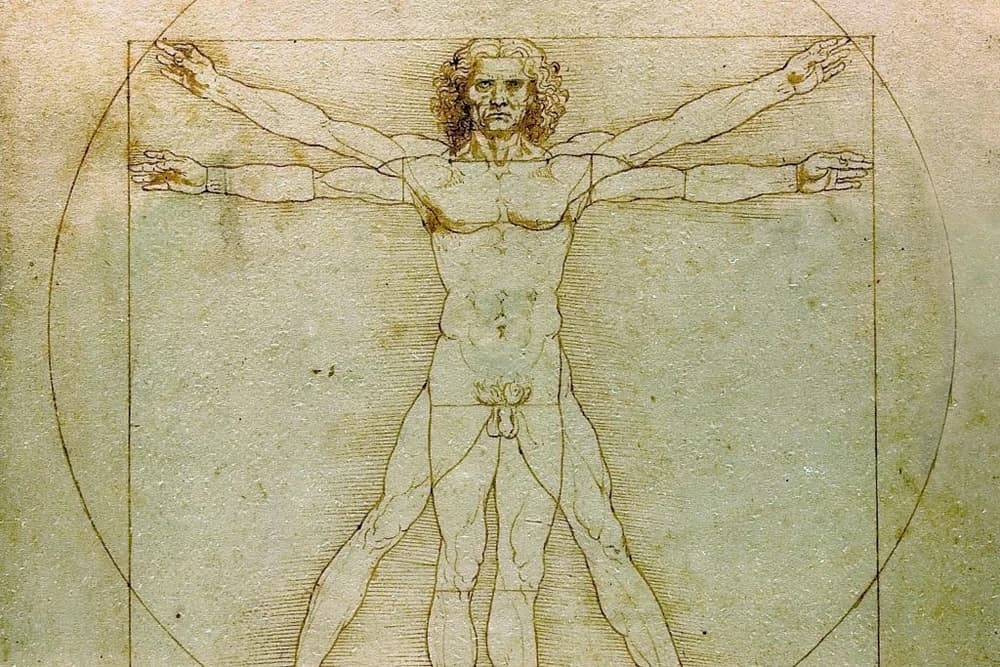
In the past, artists used to build their own technology. One of the most important and celebrated individuals in the known history of humanity was a creative technologist. The Renaissance man, Leonardo da Vinci. Using my definition, it is hard to find another singular figure in history that built as many tools and systems to enable new creative expressions. Here is some of what he did:
- Sfumato technique - Developed this method of blending colors and tones without lines or borders, creating soft, hazy transitions
- Underpainting techniques - Pioneered layering methods that built up colors gradually for luminous effects
- Oil paint innovations - Experimented with oil paint formulations and application methods for better blending and detail
- Drawing instruments - Designed specialized compasses and tools for creating precise geometric and perspective drawings
In the past two centuries through industrialization and the information age, we’ve seen creative technologists come from various disciplines such as music and filmmaking. In music, DJs experimenting with turntables created the hip hop genre. James Cameron has been the most consequential creative technologist in recent filmmaking history which is why he is the subject of a future post. At the same time, we’ve also seen a widening gap between artists and a deep understanding of how their tools work.
Thinking about what it means to be a creative technologist today, I see so much creative potential. There is incredible opportunity to build and it will be a necessity as AI collapses the bifurcation of artists and non-artists. New creativity and new art will need to be far more special and far more unique to be valuable in the age of AI. Creatives will need to build their own tools. Engineers will need to create art. You can already see some of this starting in the AI underground. In the future, I wouldn’t be surprised if we all end up being creative technologists.